
Call for Abstracts
Hawai'i Conservation Conference 2026 - Call for Abstracts
We welcome presentations that focus on Hawaiʻi and Pacific native ecosystems, species, and biocultural resources. The Abstract Review Committee seeks solution-oriented research and practices that improve conservation outcomes for the natural resources Hawaiʻi depends on. Submissions should highlight work that supports native biodiversity, restoration, ʻāina-based management, and locally relevant conservation solutions. Global insights applicable to Hawaiʻi’s context are also encouraged.
Abstract Submission & Review Process
2-Part Review Process
Abstracts are evaluated in two stages:
-
Peer Review: All abstract submissions are peer reviewed and scored by conservation community volunteers based on evaluation criteria.
-
Committee Review: A diverse Abstract Review Committee of Hawaiʻi conservation experts reviews each abstract, considers peer feedback, and assesses alignment with the criteria. The committee discusses and reaches final consensus for the final acceptance or rejection decision
The Abstract Review Committee may override peer review recommendations when deciding on acceptance, merging, or presentation format. Decisions are based on content, relevance, novelty, theme alignment, and Hawaiʻi Conservation Alliance goals, as well as writing quality, repeat or similar submissions, prior presentations, time limits, and program balance.
Due to limited conference time and high submission volume the 2026 Abstract Review Committee reserves the right to change an abstract’s presentation format for Oral Presentations, Speed Talks and time accepted to Symposiums, Forums, Workshops, Trainings, and ‘Aha formats. The Committee may consider peer feedback but can override recommendations to accept, reject, change the presentation format, or merge similar submissions from the same lab/organization.
Please view the Evaluation Criteria in which abstracts will be graded on
Conference Tracks
The Hawaiʻi Conservation Conference will explore the conference theme through five tracks
Each track highlights key concepts identified by the planning committee but is not meant to be comprehensive or exclusive. Abstracts must clearly connect to the conference theme, conservation field, and relevant track.
Hawai‘i is a global hotspot for imperiled species, many of which require long-term management to survive. This track focuses on innovative, solution-based practices to restore and regenerate native species and ecosystems for future generations.
- Restoration and regeneration of ecosystems and native species, including propagation, translocation, and genetic approaches
- Advances in conservation genetics, phylogenetics, and monitoring technologies
- Management of invasive species and biosecurity across terrestrial, aquatic, and marine systems
- Innovative tools, best practices, and policies supporting ecosystem and species recovery
This track invites research and projects focused on ahupuaʻa or moku-scale restoration. Emphasis is on community- and culturally centered efforts that integrate terrestrial and marine stewardship, conservation, and restoration. Topics include holistic approaches, cross-sector collaboration, shared models of practice, and strengthened partnerships among community members, resource managers, and practitioners to improve environmental outcomes.
- Sustainable finance, revenue generation, and long-term legacy planning
- Partnerships and collaborations across government, sectors, and user groups
- Integrated data management, sharing, and decision-support tools
- Linking terrestrial (ma uka) and marine (ma kai) restoration efforts
This track focuses on building and sustaining multi-sector partnerships to address emerging conservation challenges. Presentations should highlight communication, collaboration, and knowledge exchange across diverse conservation organizations and stakeholders.
- Building and sustaining multi-organization partnerships in conservation
- Cross-sector, interdisciplinary collaboration and approaches
- Innovative funding strategies and sustainable financing
- Linking conservation actions to policy and inclusive community engagement
This track focuses on innovative programs and training that develop the next generation of the conservation workforce.
- Building conservation career pathways for students and emerging professionals
- Intergenerational knowledge exchange and succession planning
- Innovative education, training, and workforce development programs
- Inspiring youth to build kuleana through conservation activities and jobs
This track highlights community-led and culturally grounded approaches to conservation, featuring innovative practices and examples of collaborative management.
- Community co-management and stewardship of biocultural resources
- Integrating Indigenous knowledge, language, and values in conservation
- Strengthening biocultural foundations and practices in modern management
- Applying Indigenous approaches to science and resource stewardship
Submission Formats
Submissions are accepted for oral presentations, symposiums, forums, and ʻAha, in English or ʻŌlelo Hawaiʻi (Hawaiian language). Please indicate bilingual session requests by checking the “ʻŌlelo Hawaiʻi or other bilingual sessions” box in the submission form.
Accepted presenters must view all presenter guidelines to be prepared for final presentations
Abstract Timeline
| Submissions Accepted | November 10th, 2025 – February 6th, 2026 |
| Abstract Outcome Notification | April 24th, 2026 |
| Revision Deadline | July 1st, 2026 |
| Registration | January 1st, 2026 – July 15th, 2026 |
Oxford Abstract Submissions







Presentation Formats
Individual Oral Presentation
- 12-minute individual presentations plus Q&A; 12-minute talk, 2-minutes Q&A, and 1-minute moderator introductions and transition.
- Individual Oral Abstracts must include at least one year of data and present complete results. Preliminary or incomplete findings will not be eligible for this presentation format and are subject to being accepted into a 5-minute Speed Talk Presentation or Poster Presentation.
- Presentations must end within 12 minutes to ensure time is kept & fair to all presenters in your general session.
- Oral presentations will be scheduled in thematic 1–2-hour long general sessions. General sessions are built around the content submitted each year generally grouped by various conservation topics depending on the content of research, ecosystem, region.
- “Individuals Orals – Part of Symposium” – please view Symposium Submission Format
Five Minute Speed Talk
- Speed Talks are a 5-minute presentation block, followed by 2-minutes for Q&A, and 1-minute transition to introduce the next speaker.
- Presentations must be only 5 mins to ensure time is kept & fair to all presenters in your general session.
- Speed Talk presentations provide an opportunity to present preliminary findings or developing research. Complete data sets are not required.
- Speed Talk presentations are generally grouped by subject category to create a 1-or 2-hour Speed Talk Session block.
Poster Presentation
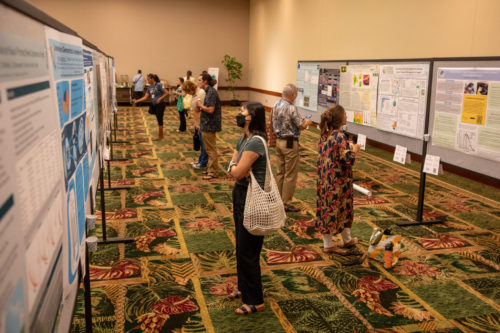
- Posters will be displayed throughout the conference, allowing attendees continuous access to your research. All poster presenters must attend the Poster Reception, a one-hour session to discuss their work, answer questions, and engage with participants.
- Posters promoting programs or advertisements will not be accepted. A QR code will be placed at each poster location to link attendees to virtual materials.
- Important: Use large, readable fonts suitable for both printed posters and computer screens.
- Presenters must submit the three required materials and attend the Poster Reception.
Poster Presenters Submission Requirements:
- PDF poster file for the Virtual Poster Gallery
- 2-minute video recording discussing your project/research for the Virtual Poster Gallery
- 36” x 48” printed poster that will be on display in the Poster Hall at the conference venue. (thumb tacks will be provided on installation day)
All digital files for the Virtual Poster Gallery are due by Wednesday, June 24th, 2026. The gallery will be available to registered attendees before and during the conference.
Symposium
Symposiums are formal, moderated sessions featuring multiple 15-minute oral presentations (12-minute talk, 2-minute Q&A, 1-minute transition) organized around a common theme. Organizers must specify the requested duration when submitting.
Submission Options:
- 1-hour symposium: 4 Individual Oral Presentations
- 2-hour symposium: 8 Individual Oral Presentations
2026 Rules for Symposium Organizers:
- Organizers are responsible for the quality of all abstracts in their symposium.
- The review committee may accept the symposium for 1 hour, 2 hours, or reject it.
- If accepted at a different time of duration, the Abstract Review Committee will provide their recommendation regarding which presentation(s) should be removed. However, it will be the symposium organizers responsibility to select which presentations will be included in the final symposium per accepted time slot
- Organizers will receive a deadline in acceptance email from the oxford platform to submit which talks they choose to be included in symposium.
- Organizers must provide their own moderator(s).
Individual Oral – Part of a Symposium:
- If submitting an abstract as part of a symposium, select “Individual Oral – Part of Symposium.”
- The symposium organizer must include your abstract number in their symposium overview submission.
Steps for submitting a symposium: Submit a symposium
- The symposium organizer is required to submit a symposium abstract overview description and session agenda that must include in order a list of each abstract number for individual presentations.
- Presenters in that symposium are required to submit an abstract in the “individual oral presentation- part of symposium” format. Each presenter will receive a unique abstract ID number. This will allow symposium organizers to identify which abstract to link.
- Once all your presenters have each submitted their abstracts in the presentation format of “individual oral presentation- part of symposium” The symposium organizer then can log back into oxford and link each abstract ID # to the symposium overview by the abstract submission deadline.
Troubleshooting information:
Forum
Forums are interactive, participatory sessions guided by a moderator or facilitator. They may include panel discussions, small group activities, or structured presentations with audience engagement. Abstracts must include a bulleted agenda showing how time will be used and audience participation (minimum 25%). Abstracts must provide brief description of the session purpose, desired outcomes, audience engagement methods, and key takeaways.
Forums can be scheduled for 1–2 hours, time requests are subject to change. Individual abstracts for presenters are not required unless requested.
Important:
- All forum participants must be registered and paid conference attendees, regardless of being scheduled on the public afternoon
- Organizers must specify the requested duration when submitting.
- The review committee may accept the forum for 1 hour, 2 hours, or reject it.
- Videos or film submissions may be accepted for presentations during a scheduled lunchtime session.
- If accepted at a different duration, organizers must adjust their timeline.
Workshop
Workshops are interactive, hands-on sessions that focus on skill-building and practical application of tools, techniques, or approaches. Abstracts must describe the purpose, desired outcomes, facilitation methods, audience engagement, and key takeaways, and include a bulleted agenda showing how time will be used. Workshops can be scheduled for 1–2 hours; requested times are subject to change.
Important:
- All workshop participants must be registered and paid conference attendees regardless of being scheduled on the public afternoon
- Organizers must specify the requested duration when submitting.
- The review committee may accept the forum for 1 hour, 2 hours, or reject it.
- If accepted at a different duration, organizers must adjust their timeline.
Training
Trainings provide capacity-building opportunities to teach skills to conservation practitioners. Abstracts must describe the purpose, goals, target audience, desired outcomes, facilitation methods, audience engagement, and key takeaways, and include a bulleted agenda showing time use. Trainings can be scheduled for 1–2 hours; requested times are subject to change.
Important:
- All Training participants must be registered and paid conference attendees regardless of being scheduled on the public afternoon.
- Organizers must specify the requested duration when submitting.
- The review committee may accept the forum for 1 hour, 2 hours, or reject it.
- If accepted at a different duration, organizers must adjust their timeline.
'Aha
Aha is a curated discussion for solutions-oriented “talk-story”-style dialogue and exchange that weave together multiple perspectives on a topic with *no audio/visual capacity *only amplified sound. In ʻŌlelo Hawaiʻi, ʻaha literally refers to a braided cord, but metaphorically refers to a synergistic gathering of people and their manaʻo (thoughts, ideas). ʻAha is envisioned to surface novel and/or practical solutions by incorporating multiple perspectives on challenges and obstacles in conservation, including those voiced by community groups or other stewardship practitioners. ʻAha Sessions present new or original information and take the next step by building off previous work or ideas to further implementation and application. Topics that are innovative or novel may be ranked higher. ʻAha may be scheduled in a 1- or 2-hour time block, please specify the requested time, times are subject to change based on abstract evaluations.
**The ʻaha session format cannot accommodate any visual presentations. The room will not be equipped with projectors or other multimedia platforms, with no exceptions. Only microphones for amplified sound will be provided to facilitate room discussions.
Abstracts must:
- Describe the topic, purpose, and desired outcomes.
- Show how the discussion informs conservation practice or outcomes.
- Demonstrate inclusion of multiple perspectives (e.g., experience, expertise, background, geographic, or environmental context).
- Organizers must set room back to original layout upon entry (map will be provided in room)
Agenda must include:
- 1–2 facilitators/moderators to guide discussion.
- Facilitation/engagement guidelines for participants.
- 4–8 speakers with brief bios highlighting their expertise and contributions.
- A bulleted agenda showing how time will be used and how solutions-oriented dialogue will be facilitated.
Desired outcomes for attendees:
- Gain new insights and practical solutions from diverse perspectives.
- Understand challenges and opportunities in conservation from multiple stakeholders.
- Build connections and foster collaboration among practitioners, community members, and policymakers.
- Identify actionable next steps to advance conservation practices.
Affiliated / Off-Site Workshops and Trainings
Organizations may host workshops or training before, during, or after the conference. Hosts are responsible for organizing all aspects of their event. The Hawaiʻi Conservation Alliance can help list affiliated events on conference marketing platforms. For details, contact conference@hawaiiconservation.org.