Conference Artwork
2019 Hawaiʻi Conservation Conference Artwork Created by Malia Heimuli (Instagram: @mlh.artworks)
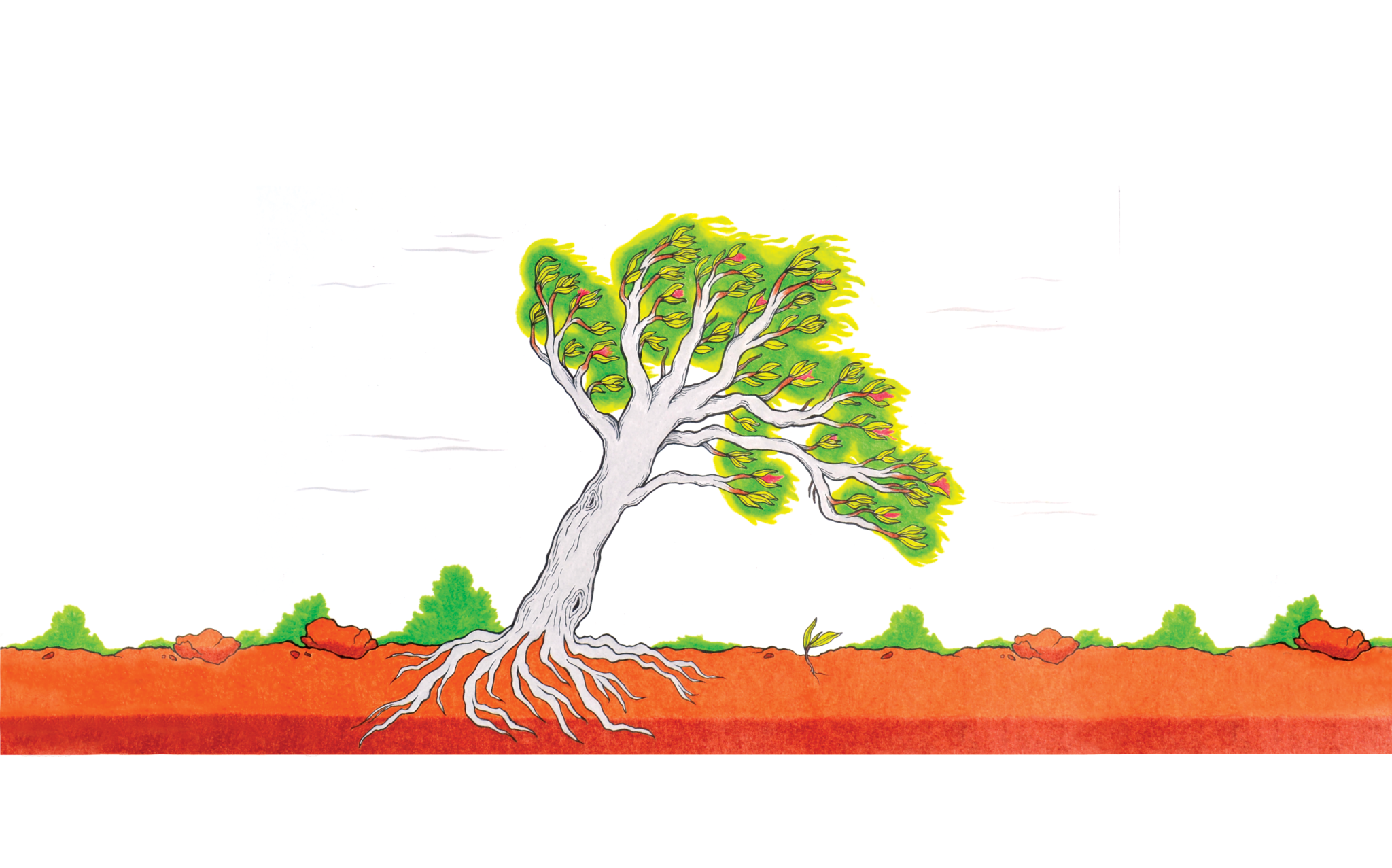
“He ʻaʻaliʻi ku makani mai au, as inspiration for this year’s conference, made me think of my experiences with ʻAʻaliʻi. For the artwork, I thought of a vast landscape that is extremely windy and rocky, with little to no canopy coverage. When exposed to full sunlight, the vibrant green of the ʻaʻaliʻi’s leaves is very eye catching from far and up close. The bending movement of the branches and leaves show how an ʻaʻaliʻi moves in those extreme winds.
The root mass of the ʻaʻaliʻi in the soil shows how a deep-rooted foundation can withstand extreme conditions. There is also another ʻōlelo noeʻau which says: He hina na ka ʻaʻaliʻi kūmakani, he ʻulaʻa pū me ka lepo. When the wind-resting ʻaʻaliʻi falls, it lifts the sod up with its roots. The kauna is if one powerful man falls, all others will fall with him. For me, this kauna is a reminder of how everything, whether tiny or huge, is important for life in this world.
The rocky red substrate is representative of Kahoʻolawe, with its defoliated landscape and very rough history. Many hands have helped reintroduce native plants such as ʻaʻaliʻi to Kanaloa and I feel this embodies what is past, present, and future resilience.
The regeneration of keiki beneath the makua ʻaʻaliʻi is the hope of the future, the people who will carry on the knowledge and kuleana of Hawaiʻi conservation. As the wind blows the keiki as well, it shows how there are stages of resilience it will experience during its growth to maturity. In the background are other ʻaʻaliʻi, which represents how plants are like people, they also need community and support of others to grow and thrive.
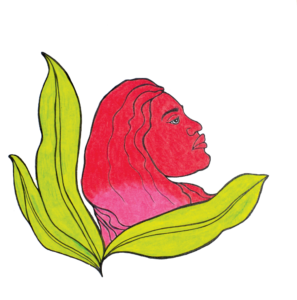
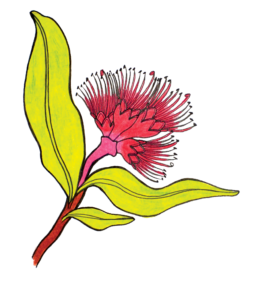
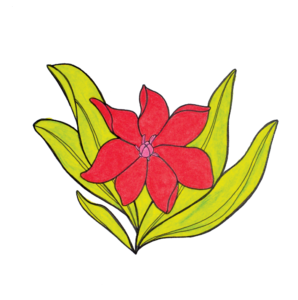
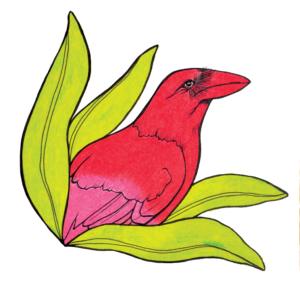
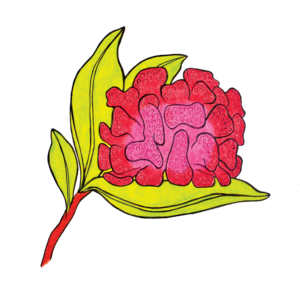
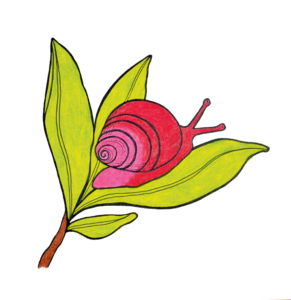
The fruit of the ʻaʻaliʻi are different images of kai and ʻāina species, such as ʻAlalā, Koʻa, and ʻŌhiʻa. These species are experiencing issues where we as kanaka are helping to ensure of their survival. I hope each of the species will represent a connection all of the conference attendees have to these species.
How can we be the ʻaʻaliʻi? And what will fruit as we experience the resilience it takes to adapt to the changes in life. These are the questions I have for myself and for others in Hawaiʻi.”